
CONTOUR IP HOLDING, LLC v. GOPRO, INC, Federal Circuit 2018 (Software Patents)
Is a GoPro too Abstract to be Patentable?
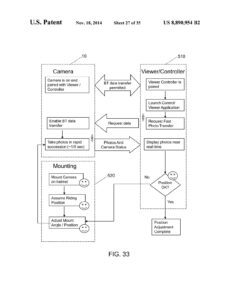 Contour IP Holding LLC owns U.S. Patent Nos. 8,890,954 and 8,896,694. The two patents share virtually identical specifications. Contour sued GoPro for patent infringement. According to Contour, several of GoPro’s point-of-view digital video camera products infringed its patents. POV video cameras are often used to capture a scene from a user’s point-of-view rather than from a thirdperson viewpoint. The patents disclose a hands-free, POV action sports video camera configured for remote image acquisition control and viewing. A POV camera is one that is mounted in a location that does not permit the user to easily see the camera. A skier, for example, may wish to…
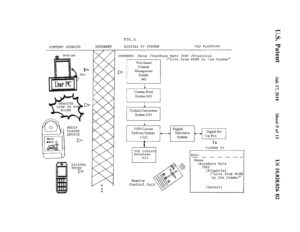 Broadband iTV sued Amazon in the Western District of Texas alleging patent infringement of five patents relating to user interfaces. Amazon moved for summary judgment, arguing that all asserted claims were patent ineligible subject matter under 35 U.S.C. § 101. The district court granted Amazon’s motion, finding the claims were directed to an abstract idea and the patents failed to provide an inventive step that transformed that abstract idea into a patent-eligible invention.
 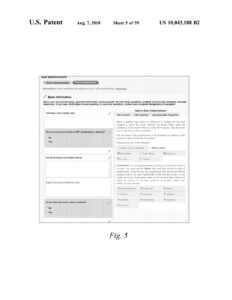 Miller Mendel, Inc. sued the City of Anna, Texas for patent infringement regarding a software system for background investigations, but the district court ruled the patent claims ineligible under 35 U.S.C. § 101.
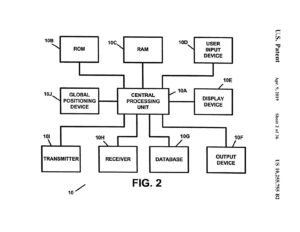 Beteiro owns U.S. Patent Nos. 9,965,920, 10,043,341, 10,147,266, and 10,255,755. All of the patents share a common specification and title: “Apparatus and Method for Facilitating Gaming Activity and/or Gambling Activity.” The patents disclose an invention which facilitates gaming activity and/or gambling activity at a gaming venue remote from the user’s or individual’s physical location” such that the user can “participate in live gaming activity and/or gambling activity via a user communication device” even if the user is not in the same location as the gaming venue. The ‘920 patent explains that many individuals enjoy gambling but may not always have access to particular gaming venues or gaming activities, for reasons including that the individuals may be located in a…